"Give Me a Buzz!"
Vernon's Financial Watchdog. A voice you can count on.
Dawn Tucker 250-549-9615
On this page:
Born, Raised, and Still Downtown • Vernon’s Financial Watchdog • Asset Management Is the Through-Line • Beyond the Budget: A Full Track Record of Follow-Through • Leadership Beyond the Council Gallery • Why I Got Started • A Voice for Your Concerns • What I’ll Fight For • What I’ll Actually Do — Day One Commitments • Why Now • In the Media • Why a Third Run? • Get Involved • Endorsements
Born, Raised, and Still Downtown
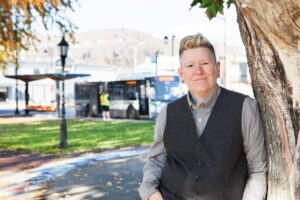
I’m a proud born-and-raised Vernon resident, and I’ve lived in the downtown core for more than 30 years, as part of a multigenerational household. I’m an educator employed by School District #22 Vernon, so I’ve spent years watching this community grow up around me — old classmates, former students, and now their kids too.
My father owned and operated a brick-and-mortar small business here when I was growing up, and he still runs a home-based business today. Growing up around that, I learned firsthand what it takes to keep a local business running, and what our business owners face every single day. I understand the pressure this economy is putting on families and seniors on fixed incomes, on downtown business owners watching their costs climb, and on young people wondering if they can afford to stay in the community they grew up in — because I’m living it alongside you.
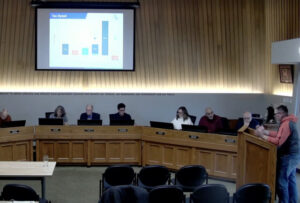
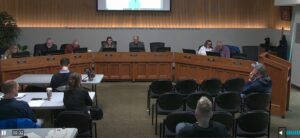
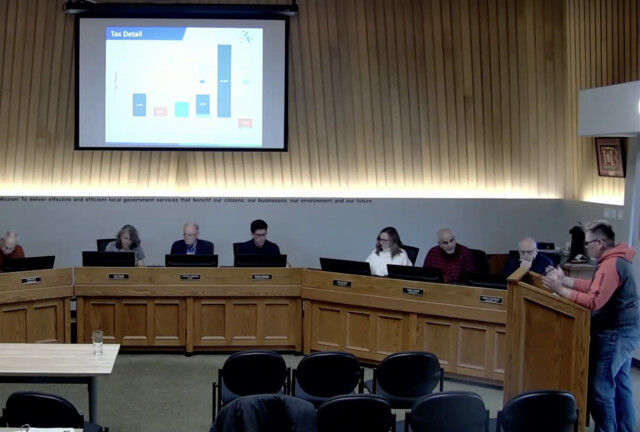
Since 2017, I’ve attended almost every Vernon city council meeting — not just budget meetings, all of them. That’s not something most residents, or most candidates, can say. Showing up, year after year, meeting after meeting, is exactly the kind of consistency I want to bring to the council table.
Vernon's Financial Watchdog
My record speaks for itself: since 2017, I have been personally showing up to Vernon council meetings — not just budget meetings, almost every meeting — not as a councillor, not as staff, but as a resident holding council accountable for every dollar, regardless of who was sitting at the table. I’ll stand by that record:
- December 2022 — Castanet named me directly, calling out cumulative sewer fee increases and quoting me warning residents to pay attention “at a time when many people are struggling.”
- November and December 2023 — I raised concerns about the Cultural Centre’s ballooning cost, pushed for a review of development cost charges so growth “pays its fair share,” and asked directly whether Coldstream and RDNO Electoral Areas B and C would help fund the Active Living Centre instead of leaving Vernon taxpayers to cover it alone.
- 2024 — I raised concerns on the budget that helped push council’s proposed tax hike down from 7.85% to 5.49% — real, measurable relief for taxpayers.
- December 2024 — At the city’s budget input session, I was the only Vernon resident who showed up to speak. I raised communication failures, capital projects proceeding without adequate resident notice, unprotected murals, and downtown parking losses. If no one else holds council accountable at budget time, I will.
- November 2025 — I pushed back publicly on the Active Living Centre’s operational costs landing on residents’ backs.
- December 2025 — I raised the question of council’s own pay increase. It forced a public council debate and vote — council ultimately voted down the freeze 6-1, but every resident got to see exactly where their councillor stood on their own pay, because I made sure the conversation happened in public. I also pointed out that council’s pay is set to rise 4.2%, against 2.2% growth in administrative wages and Canada’s 2.4% CPI — a gap I don’t think is defensible while residents are being asked to absorb rising costs everywhere else.
- Also at the December 2025 budget meeting, I questioned the City’s proposed $365,000 website redevelopment plus $15,000 a year for five years, when the budget showed no major upgrades planned over that same period — and asked why the communications department needs a fourth staff position when it started with one. I also opposed further spending on Kin Racetrack Park beyond what’s already been approved, until the next council has a clear resident mandate to proceed.
- November 2025 — At the Official Community Plan public hearing, I compared Vernon’s OCP directly to Kelowna’s, which embeds enforceable heritage protections, public art requirements, and affordable housing incentives directly into every development approval. Vernon’s OCP is largely advisory by comparison: heritage sites can still be altered, murals remain voluntary, and design standards go unenforced. I asked council to close that gap — require developers to fund complete streets and active transportation infrastructure upfront, ensure development cost charges reflect the true cost of growth, and adopt enforceable heritage and design standards instead of aspirational ones.
- December 2023 to present — At the December 2023 budget input session, I raised concerns about residential sewer rates rising to pay for Okanagan Spring Brewery’s waste digester — a roughly $13-million project. I’ve kept pressing on it since, alongside former councillor Barry Beardsell and fellow resident advocates; as Castanet reported in 2025, we’ve all raised concerns over residents paying for a system built largely to serve one of the city’s largest industrial users, while questions about the brewery’s repayment terms went unanswered for years.
…Not Just a Slogan
This is what “financial watchdog” actually means: not a slogan on a campaign sign, but a public, dated record you can check for yourself — line by line, meeting by meeting, going back years before I ever put my name on a ballot.
Vernon has a proud tradition of councillors who took that role seriously. Barry Beardsell spent four terms as council’s financial watchdog, introducing the infrastructure levy that still funds city projects today. Bob Spiers carried that tradition forward for three terms — and before he was ever elected, he was known as the only resident who would show up to public budget presentations, poring over the numbers line by line. I knew both men, if only informally, from council chambers and Vernon’s social circles, and I respect what they stood for. It’s the same thing I’ve stood for since long before my name was ever on a ballot: common sense, a focus on the basics that matter to residents, and a council that treats every dollar like it’s yours — because it is. It wasn’t a one-time thing, either: after being the only Vernon resident who showed up to the December 2024 budget input session, I kept showing up throughout 2025 — the only resident present at Vernon’s budget meetings all year. I found myself in exactly the same position Bob Spiers once was in, long before he ever ran for office.
Asset Management Is the Through-Line
Everything I push for connects back to one idea: asset management. The City already has a formal Organizational Asset Management Plan covering roads, water, and sewer — a real, disciplined commitment to properly fund and maintain what we already own, instead of letting it deteriorate into a far more expensive emergency later. I believe that same discipline has to extend to our cultural assets too.
Even the City’s own attempt at this shows why it matters. In 2023, council approved a three-phase process for O’Keefe Ranch: a facility condition assessment, a Heritage Conservation Plan, and a 10-year Capital & Operations Management Plan — a process that identified nearly $2.9 million in needed repairs before buildings failed, not after. That’s the right process. But knowing what’s needed isn’t the same as funding it: council has since cut the ranch’s annual capital funding from $50,000 to $10,000, denied an $85,000 emergency request, and the buildings remain in real disrepair. The City is now reportedly in confidential talks to sell the ranch entirely rather than commit to the plan it paid for. A good assessment means nothing without the follow-through and funding to back it up — but that funding doesn’t have to come straight out of taxpayers’ pockets. Heritage sites like O’Keefe Ranch are exactly the kind of asset that qualifies for provincial and federal heritage grants, partnerships with historical societies, and dedicated fundraising — and I want council actively pursuing that money instead of defaulting to “cut the budget or sell it.” That’s the standard I’ll hold council to: know what we have, fund the plan, and go after every dollar of outside support before asking residents to cover the gap.
Vernon doesn’t just have a spending problem — it has a distance problem. We maintain 462 km of sanitary and storm pipe. Kelowna, with roughly three and a half times our population, maintains 842 km. Vancouver, with fifteen times our population, maintains 2,136 km. Do that math, and Vernon is maintaining almost twice as much pipe per resident as Kelowna, and more than three times as much per resident as Vancouver — because we’ve spread low-density development across a huge footprint instead of growing where our infrastructure already exists. That’s why our capital budget feels like it never lets up: we’re paying, indefinitely, to keep infrastructure alive in places that never needed it in the first place. Growing inward isn’t just good planning — it’s the only way to actually get ahead of these costs instead of chasing them forever.

Our murals tell a similar story. Residents and I have said publicly that our murals have brought significant economic value into this community over the years — I can’t put an independently audited number on that, but the tourism and community interest around them speaks for itself. What I can tell you for certain is that the entire mural maintenance fund holds roughly $49,000, and that gap has already caused real harm: in 2025, the Downtown Vernon Association brought in a different artist to “touch up” murals originally created by Michelle Loughery, without her consent — work she halted, calling it an unauthorized alteration of her copyrighted work. That’s what happens when there’s no real policy, no committee, and no funded plan: decisions get made in a rush, without the right people at the table, and real harm gets done to the artists and the art itself.
Our murals and public art are Vernon assets, just like our pipes, our roads, and our heritage sites. They deserve the same kind of planned, condition-assessed, funded stewardship — not case-by-case decisions made in a crisis, and not decisions made without the artists who created them. Whether it’s sewer infrastructure in Okanagan Landing, the future of O’Keefe Ranch, or the murals in our downtown core, my approach is the same: know what we have, assess its condition honestly, and follow through on funding it the way I’ve laid out above — because a plan on paper means nothing if council won’t pay for it.
Beyond the Budget:
A Full Track Record of Follow-Through
My advocacy hasn’t been limited to the budget table:
Standing Up for Residents in Crisis
- In 2026, when Crown Villa Mobile Home Park residents faced losing their power over unresolved electrical hazards, I wrote a letter to our MLA on behalf of resident Michelle Joly Hallas, gave her direct advice on her specific questions, and offered to help at every step along the way. This is what “give me a buzz” actually means in practice — showing up for a neighbour in crisis, not just at election time.
- When the Watkins family faced fines and possible eviction from their own ALR property over living in a fifth wheel — a case that made headlines across the region — I guided them through each step of navigating council and wrote a letter to city council on their behalf. Their petition drew over 5,400 signatures, and in late 2023, council changed its bylaw to allow secondary residences on ALR land and rescinded the family’s fines — they got to stay. When they announced the news publicly, Lee and Sondra Watkins thanked me by name for fighting for them and bringing their case to council’s attention.
- When a 98-year-old Vernon senior fell in her home in January 2023 and waited nearly two hours for an ambulance — a case covered by Castanet, with fire crews arriving first after about 90 minutes — I advocated directly to our MLA for more ambulance availability for our community. Nearly two hours is far too long to wait when someone’s hurt and alone — that’s a provincial resourcing failure, and residents deserve someone willing to say so directly to the people who can actually fix it.
Infrastructure, Environment & Public Spaces
- I asked city council “how about a pool?” back in November 2017 — nearly seven years before the Active Living Centre broke ground — pushing council during 2018 budget deliberations to tell residents what it would actually take to get a new recreation facility built.
- In 2019, my advocacy helped change the City’s bylaw to allow backyard beekeeping — a real policy win that took a specific problem to council and got it fixed, and one that’s good for our local environment: pollinators matter for a healthy urban ecosystem, not just for the hobbyists keeping them.
- When the City brought forward its new tree bylaw, I flagged major gaps in it directly to council. That was some time ago now, and the bylaw still hasn’t come back to council since. A tree bylaw isn’t a minor housekeeping item — it’s a vital piece of protecting Vernon’s tree canopy, our climate resilience, and our neighbourhoods’ character, and it shouldn’t be allowed to quietly stall out after the concerns were raised.
- At the December 2022 budget meeting, I pushed council on snow clearing for multi-use paths and got a stalled drainage problem at the Okanagan Landing Road boat launch flagged for resolution.
- Since 2022, I’ve repeatedly raised the winter closure of Lakeshore Park — gates locked all winter, blocking resident access even in mild weather with no active plowing underway. I was told in a prior year it would be “looked at for the next budget.” Years later, it’s still not resolved.
- I’ve also asked council, more than once, for a resolution on the off-leash dog pilot programs at Kin Beach and Polson Park. Polson Park’s pilot began as a two-year trial meant to end in 2019; Kin Beach’s began in 2021. Both are still labeled “pilots” years past their original end dates, with no clear decision ever made permanent or reversed. It’s a small example, but it’s exactly the kind of thing that happens when nobody’s tracking the follow-through — a decision gets made, and then it just sits, indefinitely, without a resolution either way.
- I asked council for a status update on the RCMP building’s space needs. The city’s own feasibility study confirmed the concern was real: the current 2,655 square-metre detachment needs to grow to 3,138 square metres now, and 3,812 square metres by 2045, as Vernon’s population and policing demands keep growing. That study is just that — a study — but it did flag a 20-year expansion option estimated at $50.3 million as worth exploring further; no project, funding, or firm direction has actually been committed to at this point. This is exactly why I keep asking these questions — so residents find out about what a $50-million decision could look like before it’s a surprise, not after. And whenever a project of this size does move forward, I want council pursuing every dollar of provincial and federal policing infrastructure funding available before defaulting to local taxation to cover it — public safety is too important to fund entirely on residents’ backs when other funding sources exist.
Democracy, Culture & Everyday Accountability
- After the 2022 municipal election, I took residents’ criticism about low voter turnout seriously. I wrote directly to our MLA with concrete suggestions for how the province could help raise participation in future municipal elections — because a council that only hears from a fraction of eligible voters isn’t as accountable as it should be, and that’s a problem worth fixing before the next election, not just complaining about after it.
- I co-organized a petition of more than 1,659 residents to save the Sveva Caetani mural and presented it to council, calling for a real Arts & Culture Policy and an independent Public Art and Culture Advisory Committee — because Vernon’s murals and public art more broadly draw tourism dollars and economic activity, and protecting them protects that return on investment for taxpayers.
- In 2019/2020, I worked with organizers, wrote to council and advocated for Vernon’s great blue herons, when a proposed apartment development next to their decades-old nesting grounds on 20th Street threatened to disturb the birds and harm their young. Council ultimately voted unanimously to require the developer to create a protection and mitigation plan before any building permit could be issued.
- I wrote repeated letters over a number of years about safety, maintenance, and park issues at the Luc Girouard cabin. This year, the City finally secured a grant, repainted the cabin, and replaced its signage — proof that persistent, repeated advocacy on something small still gets results eventually, even when it takes years.
- I also wrote a letter on the 580 Commonage proposal, advocating to keep Vernon’s urban containment boundary intact rather than proceed with the development as originally put forward; to protect native cactus and the lava flow feature at Becker Park during construction of the new pump track and bike paths I wrote to council and staff early in the project; on early concerns over new recreation fees when they were first proposed I wrote where there were issues and how they wouldn’t work for Vernon Taxpayers; on behalf of a homeowner seeking compassionate fee relief on a replacement water meter after a house fire I advocated to both Council and the RDNO; on citizen and business concerns about the public washroom on 30th Avenue I wrote a letter when council said they failed to see an issue; and on behalf of the Halina Centre I wrote an appeal, advocating to have their rental fees waived for their anniversary celebration. After my letter, Council passed a motion exempting the rental fees.
- I’ve brought forward dozens of resident-driven issues directly to council — from the MacKay Reservoir contamination risk affecting Bolter’s Creek, to unsafe winter drainage on Okanagan Landing Road, to the lack of covered bus stops downtown, to RCMP weekend access for record checks.
This isn’t a new interest for me. It’s more than eight years of homework, done in public, on your behalf — I was already standing up at council meetings in November 2017, a full year before I first put my name on a ballot in 2018, and I’ve kept showing up to nearly every meeting since, not just when the budget is on the table.
Leadership Beyond the Council Gallery
I don’t just show up and ask questions — I build and lead the organizations that hold this community together. I currently serve as President of the Vernon Pride Society, having been part of the founding committee and Grand Marshal of Vernon’s first Pride Parade before stepping into the top leadership role. Under my leadership, Vernon Pride has continued to grow its visibility and reach across the region — made possible every year by a dedicated team of Pride Week volunteers — I proposed and led Vernon Pride’s move to become members of the Greater Vernon Chamber of Commerce as of June 2025, building a real bridge between the local 2SLGBTQ+ community and the broader business community. Our February Queer Revue fundraiser raised $6,300 to support Pride Week programming, thanks to the Vernon Pride Board, the Queer Revue team, the local businesses who generously donated, and everyone who came out to support it. I’ve also written numerous letters on behalf of Vernon Pride — to local organizations, to Vernon City Council, and to the province, including our MLA — because that advocacy work happens year-round, not just during Pride Week, wherever the decisions that affect our community actually get made.
I’ve also served on the boards of the Vernon Winter Carnival, the Vernon Teachers’ Association, the Vernon Science Centre, and the Vernon Women’s Centre — board governance experience across recreation, education, science literacy, and social services that I’ll bring directly to the council table.
I’m a co-admin of the Vernon & Area Community Forum, reaching more than 30,500 residents, and I created and co-admin the Vernon & Area Political Discussion Forum, with more than 2,500 members dedicated to City process, council decisions, and getting residents’ questions answered. I’m also a co-admin for several other community groups, including Vernon Area Fire/Flood Watch, Vintage Vernon, and Mutrie Dog Park — because keeping residents informed, whichever community they belong to, is part of the same job.
These forums aren’t just for everyday conversation — they’ve stepped up in real emergencies. During COVID-19 in 2020 and again during the White Rock Lake wildfire evacuations in 2021, the Community Forum became a genuine coordination hub: organizing and sharing up-to-date information, connecting residents with food, toiletries, and housing for themselves and their animals, keeping people calm during a genuinely frightening time, and linking family members outside Vernon with relatives who were still inside the evacuation zone. Some residents told me directly they felt the forum handled communication and coordination better than the City did. That’s not a knock on the people working hard on the ground — it’s a reflection of what’s possible when residents organize to look out for each other, and exactly the kind of grassroots capacity I want the City formally supporting, not duplicating or ignoring.
I’ve organized more than one fundraising campaign for the Schubert Centre — home to Meals on Wheels and other seniors’ programs — helping raise the vast majority of the roughly $7,500 needed in 2023 to replace a broken dishwasher critical to their operations, with the Schubert Centre itself raising the remainder, and organizing a community drive for replacement cash registers in 2024 so they could keep serving Vernon’s seniors without interruption. More recently, I’ve also given advice directly to Schubert’s current President on how to reduce costs and fundraise for further repairs they’ve needed — that’s the educator in me: teaching people how to fundraise and manage costs themselves, not just doing it for them every time. When I reached out directly, Parnell’s Appliance also donated a brand new dishwasher to The People Place. In December 2023, I also donated 54 butter and 54 fresh eggs to the Animal Auxiliary Thrift Store to help fill Christmas hampers for families in need. I’ve also helped organize and contributed to GoFundMe and other community fundraisers to support Vernon families through medical crises, housing emergencies, and some of the hardest moments of their lives.
Some of this work happens far from any camera or council meeting. On my own time and at my own expense, I’ve cleaned up abandoned homeless encampments around Vernon — including picking up discarded needles by hand — and paid the dump fees myself to see it through properly. On July 25, 2019, I went out with the Community Safety Office as part of the Anti-Tag crew, cleaning up tagging in Vernon’s alleys firsthand. I also volunteer my time and give financially to the Towne Theatre. When local nonprofits put out a call for donations — blankets, water, gloves, hats, and other essentials — I’ve given what I can and used my platforms to rally the community to do the same. I’ve also stepped in directly for seniors facing a real gap: I helped make sure one senior who needed a walker and couldn’t afford it got one, alongside a couple of other community members who chipped in, and separately, I’ve helped cover the cost of other medical equipment for seniors facing similar financial gaps. None of this is because anyone’s watching — it matters to me that Vernon is a safer, better community for the youth who will inherit it.
My connection to seniors’ issues isn’t theoretical. I grew up in a multigenerational household, and I was primary caregiver for both my paternal grandparents until they passed. I’ve also helped care for my mother through her experience with Alzheimer’s. Today, I still live multigenerationally, alongside my father. I understand what it takes to support aging family members in this community, because I’ve done it — and I’m doing it now.
I’m not just an advocate for the arts from the outside — I’m part of making them happen. From June 4 to 7, 2015, I was part of a production of Fiddler on the Roof at the Powerhouse Theatre through Big Apple Productions. In June 2024, I was proud to be part of This Is Me! — a homegrown jukebox musical about love and belonging, staged at the same theatre, also through Big Apple Productions. And in November 2024, I had the honour of playing the Narrator in a community production of The Grinch at the Performing Arts Centre, alongside RG Stars’ rhythmic gymnastics club. Vernon’s arts and culture scene isn’t an abstraction to me; it’s something I’ve shown up for, for years.
This is who I am: someone who doesn’t just point out problems, but builds the organizations and relationships needed to solve them.
Why I Got Started
My interest in local government didn’t start with a campaign — it started with two moments years apart. In grade 10, I took part in a mock council exercise and spent time with the late Councillor Patrick Nicol, whose genuine commitment to this community left a lasting impression on me. Years later, the day after the 2016 U.S. election, I decided I needed to be part of something bigger, and in January 2017 I travelled to Washington, D.C. to take part in the Women’s March — timing the trip around a visit to see my father. I was there on inauguration day and witnessed the unrest breaking out just blocks away; the march itself, the day after, was everything that wasn’t. Coming home, my takeaway was simple, and I said as much to the Kelowna Capital News at the time: we all need to be involved and active in politics — in school board, city council, regional district, and elections — or the people we disagree with are the ones who get elected. That November, I was in the council gallery for the first time, asking a simple question: how about a pool?
A Voice for Your Concerns
Every day, I hear from residents — on the street, in the shops, and through the community forums I run, reaching more than 28,000 Vernon and area residents. When someone doesn’t feel heard by City Hall, I follow up, I find answers, and I get back to them. That’s not a slogan; it’s what I already do, and I want to bring that same responsiveness to the council table.
My record shows a clear pattern. Meeting after meeting, not just at budget time, I’ve been the resident in the room raising what neighbours are telling me, not what’s convenient to say. In December 2024, when it came time for public budget input, I was the only Vernon resident who showed up at all — and that wasn’t a one-off, either: I was the only resident present throughout Vernon’s 2025 budget meetings too. I respond quickly, and I get it done — I’ll stand by that record of advocating for residents, over and over, and I’ll make sure resident concerns are always brought forward.
What I'll Fight For
Fiscal accountability. I understand the value of a tax dollar, because I know exactly where it comes from — your wallet. I will keep asking hard questions on spending, insist on value for every dollar, and push for transparency on major capital projects and shared-cost agreements with neighbouring jurisdictions. Development cost charges are part of that picture: Vernon is right now rewriting its entire DCC bylaw — the rules that decide whether growth pays its own way over the next 20 years, or falls back on existing taxpayers — through a series of council workshops held in January, May, and June 2026, with developers already at the table throughout. On July 22, 2026, the City posted on Facebook that a “public information session” on the DCC Bylaw Update was happening that same day, from 5–6 p.m. at City Hall — with no advance notice, and without ever updating the City’s own online events calendar to reflect it. I asked publicly: “Would have been great if your calendar online reflected this was occurring. Is there a reason why that this is the only notice the public is getting?” The City’s response didn’t answer the question — it just redirected me to book a private appointment with their Development Engineering team instead. When another resident pressed further, the City admitted outright: invites had been sent to approximately 90 members of the development community to attend that same session. Ninety developers got a personal invite. Residents got a same-day Facebook post. I said as much directly: “It’s too bad that only the development community was prioritized, as many of the public are interested in DCCs in our community and changes that may occur… I encourage the city in the future to add such sessions to the online engagement section if the online calendar isn’t appropriate, and to advertise it further out beyond the day it’s occurring.” I wasn’t the only one who noticed the City’s non-answer, either — other residents called it out directly in the same thread. Feedback on the bylaw is only being accepted by email until July 29, 2026. If residents’ input matters, it has to come with real notice and a real seat at the table — not a same-day Facebook post while developers got weeks of advance access.
Housing you can actually afford — at every age. We don’t need to keep sprawling outward — we need real densification and infill housing in our core, and a City that actually works with developers and nonprofit housing groups to bring a variety of housing types to Vernon, not just single-family lots on one end or high-rise towers on the other. We’re already starting to see what this looks like: in the Alexis Park neighbourhood, the Province’s small-scale zoning changes are bringing older homes down and infill housing up. That’s smart growth in action, and I want to see it done right — following our Official Community Plan, close to transit, services, and downtown, not scattered without a plan. Missing-middle housing — duplexes, triplexes, small multiplexes, townhomes — belongs in our established neighbourhoods, close enough to downtown that residents can actually walk to the local businesses that depend on them. The City has already identified some underused land for housing, but identifying land isn’t the hard part — building the right kind of housing, in the right places, is, and nonprofit housing partners have a real role to play in getting it done. I’ll push to keep the City’s affordable housing reserve — currently around $527,500 — topped up with uncommitted year-end funds instead of letting it sit static, so we have real money behind our nonprofit housing partnerships, not just good intentions. And I want that reserve working alongside senior government dollars, not instead of them — BC Housing and CMHC both fund exactly this kind of nonprofit housing partnership, and Vernon should be applying for every dollar available rather than relying on the local reserve alone. I want a community where our youngest families and our seniors alike can find housing they can afford.
I understand housing from both sides of the relationship, not just from a policy binder. Since 2018, my family has owned and personally managed a small rental fourplex — I handle everything myself, from tenant selection to walkthroughs to rent. We bought it because we saw a real gap in this market: well-run rentals that actually welcome pets, so people aren’t forced to choose between their home and their family. We’ve never raised the rent on a tenant during their tenancy. I’ve also done advocacy work on the BC Residential Tenancy Act, for both tenants and landlords, because a healthy rental market has to work fairly for everyone in it.
A Vernon our young people don’t have to leave. I spent years as an educator working directly with youth, and I want a community that works not just for young families, but for teens and graduates too — so there’s a real reason to stay here for school, for work, and for life after graduation. That starts with more activities and things for young people to actually do here, and it means affordability and housing options across every stage of life, not just one.
A downtown and a community that works for residents. Better winter access to our parks, safer infrastructure, more responsive city communication, and real follow-through when residents raise a concern — not just an acknowledgment email.
Protecting Vernon’s murals — and all of our public art. Residents and I have said publicly that our murals have brought real economic value into this community over the years, through the Sveva Caetani mural petition I co-led with resident Judy Rose and brought to council — I can’t put an independently audited number on that, but with 27 murals, Vernon has one of the largest collections of outdoor public art in Canada, and the tourism and community pride around them speaks for itself. What’s certain is the entire mural maintenance fund sits at roughly $49,000, and that gap has consequences: in 2025, a dispute broke out after the Downtown Vernon Association brought in a different artist to “touch up” murals originally created by Michelle Loughery without her consent — work she halted, calling it an unauthorized alteration of her copyrighted work. This city hasn’t had a real Arts & Culture Policy since 2009, and situations like this are exactly why we need one. I’ll keep pushing to get a real policy and an independent advisory committee in place, so decisions about our public art are made properly — with the right people at the table — instead of in a rush, and so we can pursue grant funding that takes the pressure off taxpayers rather than relying on general revenue.
Water security, and finishing the job on sewer. This isn’t new for me — I raised it back in 2022, and it’s still not fixed. Stormwater management remains the number one factor impacting our lake water quality, and City genetic testing has confirmed septic pollution in the ditches throughout older neighbourhoods like Okanagan Landing, directly impacting the water quality of the lake that supplies our drinking water. And when it comes to who pays for sewer infrastructure, the deck is stacked: sewer lines to Predator Ridge and Sparkling Hill were cost-shared a third by the City, while Okanagan Landing residents are charged 100% of the cost themselves. Meanwhile, our reclaimed water irrigation rates haven’t been raised since 2017, even as residential sewer rates climbed 3% every year for five straight years — a cumulative 20% increase. Providing that irrigation water costs the City more than $1 million a year, while generating less than $250,000 in revenue. That gap gets covered by residents, and it’s time to ask why. We need to finally connect these older neighbourhoods to sewer on fair terms — with real incentives, since it’s cheaper in the long run and better for the lake the more residents are hooked up — invest in proper stormwater and ditch infrastructure, hold new development and large industrial users accountable for the infrastructure costs they create instead of leaving existing residents to absorb them, and set our reclaimed water and irrigation fees so they actually reflect what it costs to provide the service. Protecting the lake that supplies our drinking water is an environmental priority, not just an infrastructure line item — and that’s exactly the kind of project that qualifies for federal and provincial infrastructure and clean-water funding. I want that money actively pursued, not left on the table while residents pick up the difference.
I’ve also pushed council for years to use reclaimed water responsibly and expand how it’s used, instead of letting it go to waste — and in July 2026, council finally started catching up. Amid a historic drought that put Greater Vernon on Stage 3 water restrictions, the City secured provincial approval on July 3, 2026 to expand reclaimed water use — but that approval is only temporary, permitted for municipal operations until September 30, 2028, not a permanent fix. While a motion in council has been made directing staff to explore expanding reclaimed water use for local businesses has been made, specifically calling for “heavier advocacy with provincial ministries.” I raised this years before it became a drought emergency. Vernon needs to use reclaimed water on more sports fields, parks and other areas as well as looking for agricultural users who can safely utilize it like they do in other countries. Being proactive rather than reactive is important. A temporary permission granted during a crisis isn’t the same as the responsible, permanent policy Vernon actually needs — and I’ll keep pushing for that, not just a stopgap.
The environment isn’t an afterthought — it has to be built into how we make every decision. Vernon’s Climate Action Plan is a good foundation, but a plan that lives entirely inside City Hall doesn’t do much if it stops at the property line. Residents need real, actionable ways to be part of it too — not just a document to point to. That starts with finally prioritizing our stalled tree bylaw: I flagged major gaps in it when it first came to council, and it still hasn’t come back, even though our tree canopy is directly tied to climate resilience, not just neighbourhood character. It means continuing to tweak the City’s annual Trees for Tomorrow program so it keeps pace with what residents and our climate actually need. It means creating further grants that help residents make improvements that benefit the whole city, not just their own property. And it means working directly with residents on FireSmart practices and genuine emergency preparedness — building on the block-captain and community-drill approach I’ve already called for, so residents know what to do when an emergency affects our city, instead of finding out in the moment.
A community where residents feel safe — in every park, downtown block, and neighbourhood. This has come up again and again when I talk to residents, and the numbers back up what people are feeling: RCMP quarterly reports to council show criminal offences up 4.63% and calls for service up 4.47% in the third quarter of 2025 alone, with drug-related issues topping the list of what residents tell me worries them most, especially after dark. I want real, practical steps here, not slogans:
- Design our public spaces to feel safer, not just look nicer. Better lighting, clear sightlines, and activated public spaces in our parks and downtown core are proven, low-cost ways to improve how safe a space actually feels — and they don’t require more policing to work.
- Support and actually publicize the community programs the RCMP already runs. Most residents have never heard of the RCMP’s “Coffee With a Cop” events, the “Folks on Spokes” bike patrol, or the Anti-Tag response team. These programs exist and they’re working — I know, because on July 25, 2019, I went out myself with the Community Safety Office and helped clean up tagging in Vernon’s alleys as part of the Anti-Tag crew. Council and the city should be helping residents know these programs exist, not letting them stay invisible.
- Make crime data something residents can actually find and understand, not a report buried in a council agenda item once a quarter. If we’re serious about transparency, that has to include public safety, not just budget line items.
- Fund policing based on documented need, not a blank cheque. As I’ve already raised on the RCMP building’s space needs above, I want any future project funded strictly according to what the numbers actually justify — and with senior government dollars pursued first.
- I’d like to see the Downtown Vernon Association explore a downtown ambassador program — a friendly, non-police presence downtown who can help residents and visitors, keep an eye on the block, and support our local businesses, funded and run through the DVA rather than added to the city’s operating budget. It’s a proven model in other communities, and it fits squarely in the DVA’s own mandate to support a safe, thriving downtown.
None of this is in conflict with building a genuinely inclusive, climate-resilient community — I won’t treat those goals as competing with each other. That means practical, evidence-based steps and a council willing to modernize how we do things instead of just defaulting to how it’s always been done.
Shop local, buy local — and make it easy to get there. This is something I learned from both my grandparents and my father, not something I picked up as a talking point. Living downtown, I consider it my neighbourhood, and I consistently shop there myself, supporting the businesses around me. These businesses are the backbone of our community — without them, we wouldn’t have the local sports team sponsorships or the fundraiser support our community relies on and has always been generous with. That’s invaluable, and it means we need a genuinely vibrant business community for years to come, not just for this election cycle. I’ll champion policies that make it easier — not harder — for Vernon residents to shop, eat, and spend their dollars here first, and for local business owners to actually survive and grow in this economy. Council needs to be progressive and adaptable, finding real ways to make Vernon a destination — not just for tourists, but for new residents, developers, and businesses who could choose to build their future here instead of somewhere else. This is exactly why densifying our core with infill housing matters as much for our local economy as it does for our infrastructure costs: more residents living close to downtown means more people walking to the businesses that make this community what it is, not driving past them on their way out of town. And that has to include taking downtown parking seriously. It’s one of the most common concerns I hear from shoppers and business owners alike, and it keeps getting worse, not better: the parking lot for the new Cultural Centre is gone, and the lot next to the Sveva Caetani mural was sold too. We keep losing parking downtown while adding the people and projects that need it most. Any real strategy for a thriving downtown needs to treat parking as essential, not an afterthought.
Genuine accessibility and inclusion — everywhere, not just what’s new. I’ve publicly raised concerns about accessibility in our newest public buildings, because “fully accessible” needs to mean something in practice, not just in a press release. But this isn’t only about new construction — it’s about every building, every sidewalk, and every corner of our community, old and new alike. That includes winter mobility: I’ve raised how plow berms trap residents using mobility placards, scooters, and walkers near curb cuts, forcing them into slush and ice, and how our multi-use paths don’t get cleared nearly as reliably as roadways, despite being priority infrastructure under our own climate action plan. And it includes making sure residents actually know what’s available to them — like the City’s free 3-hour accessible parking permit, a genuinely good program that’s simply under-publicized. It also means genuinely following through on Vernon’s Age- and Dementia-Friendly Community Plan, endorsed by council in June 2024 in partnership with the Vernon Seniors Action Network, Interior Health, and the Alzheimer Society of BC — not just endorsing it and moving on. This work matters to me personally: I was primary caregiver for both of my grandparents, and I’ve also helped care for my own mother through her experience with Alzheimer’s. I want to see the plan’s five strategic directions — city places and spaces, housing and transportation, community support and health services, communication, and social inclusion — genuinely woven into real council decisions, so Vernon is inclusive for every resident, no matter their age or ability. I’ll keep holding the city to a real accessibility standard across the board, not just where it’s easy or visible.
A council that answers to residents, not to whoever’s loudest in the room. I don’t have personal conflicts that would interfere in chambers, and my priority isn’t my own opinions or pet projects — it’s what this community and its residents actually want. My grandmother always told me to leave things better than you found them, and that’s exactly what I want for Vernon, if given the chance.
What I'll Actually Do — Day One Commitments
I’ve spent years pointing out where council falls short. Here’s what I’ll bring forward directly, on the record, if elected:
- A motion requiring 30+ days’ resident and business notice before capital projects begin nearby — something I asked for from the gallery in 2024. I’ve watched what happens without it: after projects at Lakeview Park and near By’s Market started without enough warning, staff had to scramble to fix parking issues afterward, and small businesses paid the price. Vernon has already lost Baker’s Dozen and two other independent stores in situations like this. It’s time to talk to residents and business owners before a project starts, not after.
- Real accountability for contractors working in our neighbourhoods — including proper insurance requirements and a clear process for residents to seek recourse when out-of-town contractors damage infrastructure, flood basements, or leave a mess behind. No resident should end up losing their home because a contractor couldn’t be reached.
- Dedicated resident time at council meetings, and regular “coffee with your councillor” sessions — so residents don’t have to wait for a formal public input period once a year to be heard.
- A formal Arts & Culture Policy and independent Public Art and Culture Advisory Committee, so Vernon’s murals and all of our public art stop being decided case-by-case — and a real condition assessment and capital plan for our public art, using the same kind of process the City used for O’Keefe Ranch, funded the same way I’ve described above.
- Building on what’s already working — like the infill happening in Alexis Park — I’ll push for more densification and infill housing done right: a variety of housing types close to transit and services, developed in partnership with nonprofit housing groups as well as private developers, and guided by our Official Community Plan instead of ad hoc decisions.
- A council communication standard, backed by real staffing — a public commitment on response times to resident inquiries, including dedicated staff in high-volume departments like planning so resident calls and emails don’t get pushed aside for weeks. “I never heard back” needs to stop being the most common complaint I hear.
- A public annual accounting of shared-cost agreements with Coldstream and RDNO Electoral Areas B and C, so residents can see exactly what Vernon taxpayers are subsidizing for our neighbours — and what we’re getting back.
- A real emergency preparedness plan residents actually know how to use — block captains, building captains, and practice drills, especially for downtown residents who are mostly seniors without easy access to apps or computers. A plan on paper isn’t enough; during the White Rock Lake wildfire evacuation alerts in 2021, I had family members from out of town reaching out to me directly, unable to reach their own mother, asking me to go check on her myself. Residents deserve to know the plan and know they won’t be forgotten. I’ve seen what real community coordination looks like — the Community Forum stepped up during that same wildfire, and during COVID before it, precisely because a formal city plan wasn’t reaching everyone — and I want that same grassroots capacity built into the City’s actual emergency plan, not left to volunteers to fill the gap every time. And there’s real provincial and federal emergency-preparedness grant funding available for exactly this kind of program — I want council applying for it, not just budgeting it out of general revenue.
- Public input sequenced before a vote, not after, wherever council actually controls the timing — formal public hearings on bylaws like the OCP are set by the province and already have their own required process, but budget deliberations and other council decisions aren’t bound the same way. I’ve asked council directly to hold public input sessions on those before the vote happens, not after, so residents’ input can actually shape the outcome instead of arriving too late to matter. And when it comes to how that input is gathered, I want to see it done consistently and well — I’ve seen firsthand how one badly-run engagement session (loud room, no clear format, felt like an ambush) can shut residents out just as effectively as no session at all, while a well-run one down the street drew a real crowd and real feedback. Format matters as much as the invitation.
- A formal recommendation to the Downtown Vernon Association to explore a downtown ambassador program — a friendly, non-police presence to support residents, visitors, and local businesses downtown, funded and run through the DVA rather than the city’s operating budget. It’s a proven model elsewhere, and it fits squarely within the DVA’s own mandate.
And this is a sample of where I’ll start, not a comprehensive list of everything I’ll pursue. I also intend to push for a resolution on our stalled tree bylaw, finally get a real decision made on the off-leash dog pilot programs at Kin Beach and Polson Park instead of letting them sit indefinitely, and keep working through the other items I’ve raised over the years that haven’t gotten a real answer yet. These ten are where I’m starting on day one — they’re not the end of what I plan to do.
This isn’t a wish list. Every one of these is something I’ve already raised in a council chamber. The only difference now is I’m asking for a vote, not just a public comment period.
Why Now
I’ve run twice before, and both times I told you I’d show up and do the work. I did — for years before that, and every year since. The tax relief, the public debate over council’s own pay, the ALC pool, the issues fixed after residents raised them at budget meetings — that all happened because residents like you spoke up, and I made sure council heard it. Now I’m asking for the seat at the table, so that work doesn’t depend on me being in the gallery — it’s built into the council itself.
My record clearly shows where I stand: for years, in public, on the record, meeting after meeting — not just when the budget is on the table — I’ve held council to account for every dollar no matter who was in power. That’s not a promise. That’s my history, and it’s the number one reason to send me to that table.
And it’s not just about the dollars. At the December 2024 budget input session, I was the only Vernon resident who showed up to speak — and I kept showing up as the only resident throughout Vernon’s 2025 budget meetings too. I respond quickly, I follow through, and I get it done — and I’ll keep making sure resident concerns are brought forward, every time.
I will listen. I will follow up. And I will always tell you where your money is going.
In the Media
Local press has taken notice of this work over the years. Castanet called me “a longtime council watchdog” in a November 2022 article on sewer fee increases. The Vernon Morning Star described me as “a community-conscious citizen who isn’t afraid to challenge local politicians or question policies.” They weren’t wrong then, and the record since backs it up. See recent posts on My Blog and articles In the News.


Why a Third Run?
I’ve run for council twice before and didn’t win either time. Here’s the honest answer to why I’m running again: in 2018, I was asking Vernon to trust a newcomer with good intentions. Today, I’m asking you to trust someone with a specific, dated, public record you can check for yourself — since 2017, I’ve attended almost every council meeting, not just the budget ones, plus real policy wins and a reputation two different local news outlets have independently described the same way. That record didn’t exist in 2018. It does now, and it’s the reason this campaign is different.
Get Involved
This campaign runs on residents, not special interests.
If you want to help:
- Volunteer — door-knocking, lawn signs, or helping at community events. Give me a buzz and I’ll find a way to put your time to good use.
- Spread the word — share this platform in the Vernon & Area Community Forum, the Vernon & Area Political Discussion Forum, on your social media, email lists, or with your friends and neighbours directly. You can also print your own window signs – click here to download the PDF.
- Talk to me directly — if there’s an issue on your street I don’t know about yet, that’s exactly what I want to hear.
250-549-9615
info@buzzdawn.ca | Facebook | Youtube
How to donate to Dawn’s campaign:
You can make a campaign contribution if you are:
- a resident of B.C., and
- a Canadian citizen or permanent resident.
Donations can be sent via e-transfer to donate@buzzdawn.ca or via Paypal
No tax receipts can be provided. Please note that any donation over $100 requires this campaign to report your name and the amount of your donation. If sending an e-transfer, please be sure to let Dawn know your name and address by sending a note to info@buzzdawn.ca
Anonymous donations up to $50 can be accepted but must remain truly anonymous.
Find out more about campaign contribution rules as outlined in the Local Elections Campaign Financing Act.
General Voting Day is Saturday, October 17, 2026 from 8am to 8pm
Advance Voting October 7 & 14
Dawn Tucker for Vernon City Council
Vernon's Financial Watchdog
A voice you can count on
Endorsements
Here is my list: Someone who knows this community. Someone who has familiarity with the workings of municipal government. Someone who recognizes the important role that culture and environment play in the quality of life of our City. Someone who has shown their dedication through active participation in community life. Someone who will represent diverse groups in our community both through life experience and advocacy.
Dawn checks all those boxes:
They have lived all their life in Vernon.
Their father was a small business owner in downtown Vernon.
They have attended almost every council and Budget meeting since 2017.
They have flagged the need for a public art policy, including the many murals in our town, as well as the importance of maintaining their quality.
They have moderated two Community Forums on Facebook for several years, maintaining civil and respectful discussion – not an easy thing to do these days!
They are a strong advocate for the 2SLBGTQIA+ community, as an active member and current President of Vernon Pride Society.
Their comments posted on social media after a public hearing on the new Official Community Plan, approved in December 2025, summarize their priorities: "Vernon residents deserved to see their input reflected in the decisions that followed. Council heard us, but they did not listen. Vernon deserves better than policies that say one thing and approvals that do the opposite. We deserve a plan that protects taxpayers, supports transit, reduces wildfire risk, safeguards ecosystems. We will keep pushing for a Vernon that grows responsibly, sustainably, and in line with the values our community clearly expressed.”
Dawn has my vote. I hope they have yours."
Connect with our community online:
Vernon & Area Community Forum
30,500+ members
This is your community forum. Here, we come together to gather information, learn more about local services, ask for recommendations, and generally, let folks know what’s happening in our city & surrounding area. New members always welcome!
Join a local Facebook forum:
Share your ideas, get recommendations, ask a question, get an answer.
Vernon & Area Political Discussion Forum
2,500+ followers
Questions about City processes? Don’t feel heard? Need help because no one is responding to your concerns? Want to talk about City Council decisions or share ideas to make our community better? This is the group.
Give Me A Buzz!
250 549 9615
Go to www.vernon.ca/voterinfo
to find out how and when you can vote.
General Voting Day is Saturday, October 17, 2026 from 8am to 8pm
Advance Voting October 7 & 14
Authorized by Dawn Tucker, Financial Agent.